
Mounting a TV on a Brick or Concrete Wall: What’s Involved?
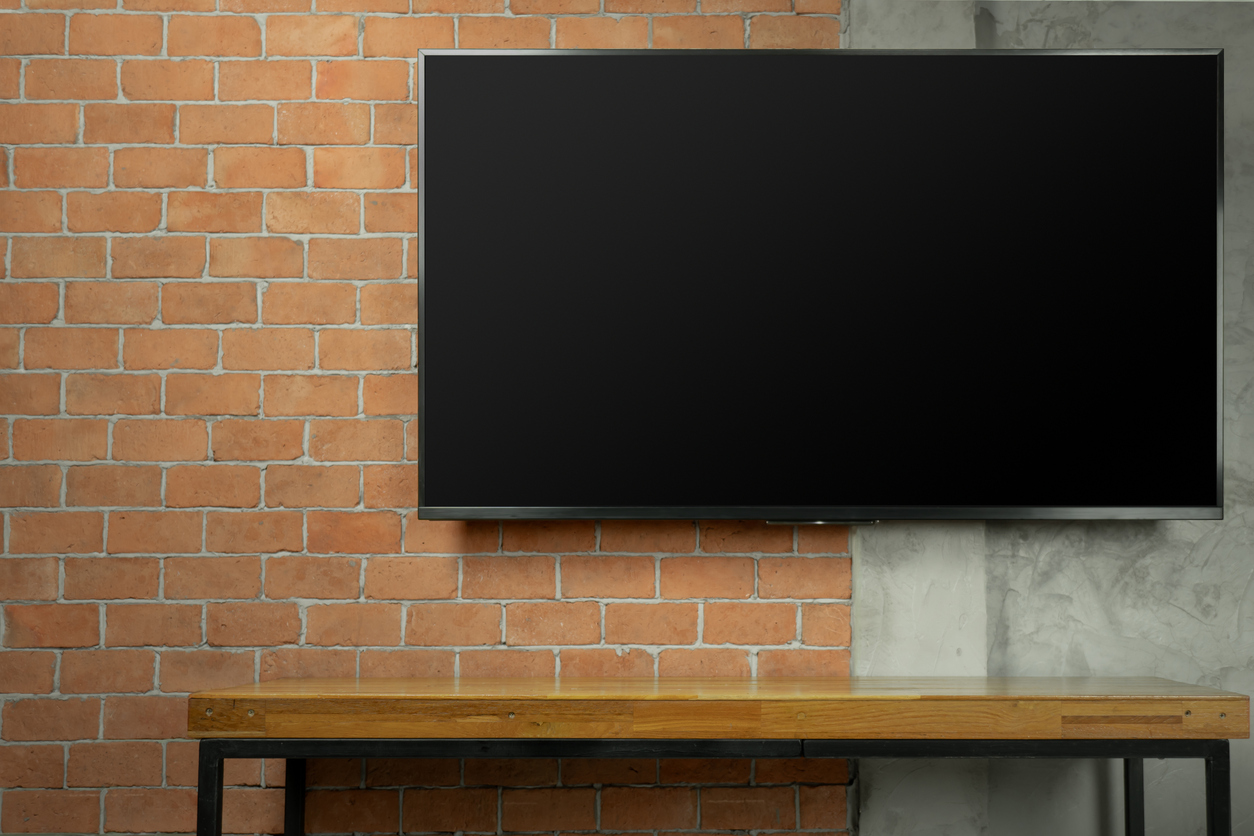
Mounting a TV onto a brick or concrete wall requires careful planning. They’re much more complex than other materials, such as plasterboard, and each surface needs its own approach. While a professional installation is recommended, with the right tools and techniques, a DIY installation is possible. Here’s everything you need to know.
Why Brick and Concrete Installations are More Complex Than Plasterboard
Both brick and concrete installations are more challenging than plasterboard. They’re solid all the way through and require careful planning, specialist tools and unique techniques to achieve a quality install. With plasterboard, for most installs, a standard drill, anchors and screws will suffice.
But for brick and concrete, it’s much more complex. Utilising the same tools as you would for plasterboard will result in disaster; the weight of the TV would simply pull the anchors and screws out of the wall.
The Tools and Fixings Required (Masonry Anchors, Hammer Drills)
For a successful install that guarantees longevity, specialist tools and fixings are required. Non-negotiables are a hammer drill and masonry anchors if you want to achieve a clean and precise finish. You’ll need to ensure that the masonry anchors are compatible with the material of the wall. For a brick install, heavy-duty sleeve anchors are recommended. For a concrete install, look for concrete screws or sleeve anchors.
How to Find the Right Spot Without Damaging the Wall
When it comes to finding the optimum viewing height for your TV, the rule of thumb is to aim for eye-level. But when you are installing materials such as brick or concrete, it’s not always possible to achieve this height. The most important priority is ensuring that the wall remains undamaged. Here are some top tips:
- Drill into the centre of the brick and not into the mortar.
- Use a level to make sure the TV is even before drilling.
- Ensure that you don’t over-tighten the bolts, as this could cause cracks in the wall.
- Consider using a tilted or full-motion mount for flexibility.
Cable Management Options on Hard Surface Walls
There are a few people who would disagree with cable concealment being the optimum solution. But with hard surface walls, you need to be extra careful. If you are looking to channel your cables into the wall for complete concealment, you should ensure not to damage the wall in the process. In these cases, seeking the advice of professional installers is recommended. If complete concealment is not possible, you could consider cord concealing products or introducing well-placed accessories to disguise cables.
Cost and Time Considerations Vs. Standard Installs
When installing your TV onto a brick or concrete surface, it’s likely to be more costly and time-consuming than a standard install. For most homeowners, the purchase of specialist tools and fixings comes first, followed by meticulous planning. And both tasks require more time and money than standard installs. If you are inexperienced in DIY, seeking the assistance of professional installers is recommended for a quick, cost-effective and safe install.
Why This Job is Best Left to Experienced Professionals
Unlike standard installs, which are usually successful when going it alone, mounting a TV onto a brick or concrete is a much more complex task. Most homeowners choose to call in the experts to:
- Avoid purchasing specialist equipment for the job, which can be expensive, especially for a one-off.
- Ensure that the TV remains securely attached to the wall.
- Protect the structure and integrity of the wall.
- Conceal cables as much as possible.
- Ensure that the TV is placed at the optimal viewing height.
If you are looking to install a TV mount on a brick or concrete wall, get in touch with the friendly team at All About Hanging. Our expert TV wall mounting services include specialised experience with brick and concrete installations, ensuring secure mounting with the right tools and techniques while protecting your wall’s structural integrity.