
Articulating vs. Fixed: Which TV Wall Mount is Right for Your Living Space?
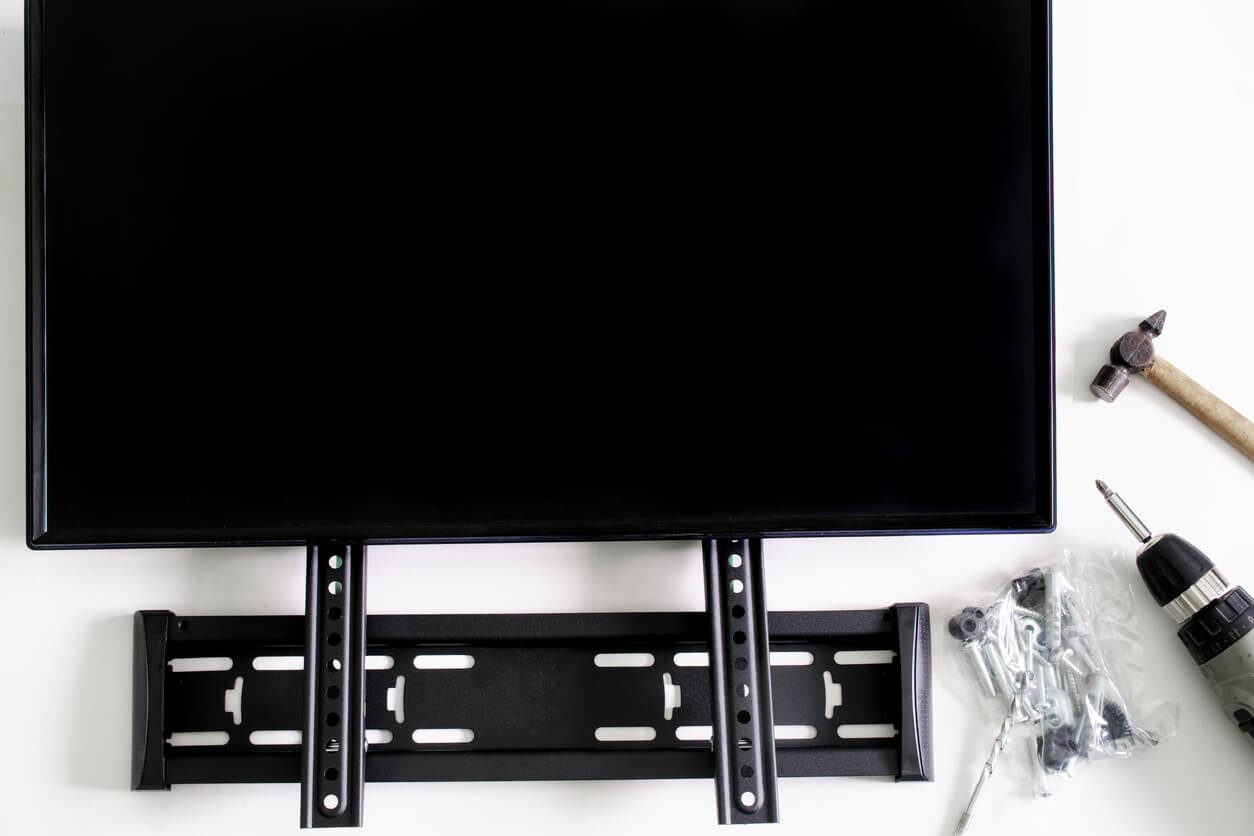
TVs have traditionally been accommodated on stands that also have set-top boxes and recording devices with spaces for cabling. However, TVs are increasingly being wall-mounted since this reduces clutter on the floor and makes for a more minimalist and cleaner appearance.
If you decide to mount your TV on a wall, the choice of the correct bracket is crucial. The right choice will ensure your complete safety, maximise your viewing experience and give you total comfort, as well as providing the best value for money.
Key Differences Between Full-Motion, Tilt, and Fixed Mounts
When choosing the TV wall mount that is best for you, there are three basic types to consider:
1. Fixed mounts are the most basic type and are fixed flat to the wall with the TV being held in a static position. They have several benefits over other types:
- They are perfectly flat against the wall with just enough space for cables and plugs, so they are the neatest and most discreet type.
- With no moving parts, these are the cheapest type and the simplest to install.
This type of mount, however, does have some disadvantages:
- It is the least flexible option with a fixed viewing position that may not be suitable for larger rooms or open-plan areas with multiple viewing points.
- Accessing ports on the rear of the TV may be difficult due to limited space.
- It may not be suitable if you need to frequently plug in and unplug your TV or connect different devices.
2. Tilting mounts allow your TV to be tilted upwards and downwards, typically in a 5-15 degree range. The benefits of this type are:
- The ability to place the TV higher on a wall and then tilt it downwards to provide optimum viewing and reduced neck strain.
- Adjustments to reduce glare at different times of the day and to change connections when needed.
Such a mount is bulkier than a fixed version, is more costly and has a limited range of motions.
3. Articulating (full motion) wall mounts have a movable arm that enables the TV to be tilted, pulled away from the wall and moved to a variety of angles. It is the most flexible type of mount that allows precise positioning of the TV for optimum viewing. It is also the only practical way to mount a TV in a corner and be able to see the screen properly, while access to plugs, sockets and cabling is simplified.
An articulated wall mount is, however, the most difficult to install properly and takes up more space since it will not fit flat to the wall. Due to the number of moving parts, it is also the most expensive type.
Determining Viewing Angles for the Perfect Setup
One of the most important considerations when choosing your TV mount is having the best viewing angle. This is particularly crucial for room layouts with multiple viewing points and that have glare from the sun at different times of the day.
When mounting on a wall, it is generally considered that the centre of the TV screen should be 42 inches from the floor. Ideally, it should also be centrally positioned along a wall so everyone can see it.
The general aim is to have the TV screen facing the main audience, so they get the best view. This can vary in large rooms and open-plan areas, so an articulated mount can be the best option for optimum viewing in these cases.
Before drilling any holes for the mount, it is best to test the positioning to determine the best viewing angles. You can also seek the advice of a professional installer who will know the best options.
The Importance of VESA Standards and Weight Capacity
VESA (Video Electronics Standards Association) sets standards for mounting TVs and other flat panel displays, ensuring compatibility between TVs and their mounts. The standards vary between the different sizes of screen and ensure that, for safety reasons, TVs are correctly mounted.
It is vital you obtain the correct mount for the size of your TV. If you get the wrong size, the screw holes will not match up, and the TV will just not fit.
If you already have your TV, refer to the supplied manual for the VESA dimensions; otherwise, check the TV specification. Once you know the correct dimensions, you can obtain the appropriate mounting bracket and be confident it will do the job.
Installation Complexities for Different Mount Types
Fixed mounts are the simplest and easiest to install, while articulated mounts require the most effort. TVs with large screens are particularly heavy, and so it is important, for safety reasons, that the mount is securely fixed to the wall.
TV mounts are best fixed to solid walls that can take the weight rather than to partition walls that might not be sufficiently substantial. Always check the wall before you start and use plugs and screws that are large enough to hold the overall weight.
For a neat job, use a cable tidy or cord clips so that the wires will not spoil the effect. It is even possible to embed the cables in the wall, but this adds complexity to the job.
The main consideration when fixing the mount is safety, so you need to ensure everything is fully secure. Bear in mind that large TV screens are heavy, so seek help when mounting the TV on the bracket.
If you are not confident in doing the job yourself, we can do it for you, so you will be sure everything is done properly. We can also advise on the most suitable bracket and position it correctly for optimum viewing, so get in touch and we will help you out. Choosing and installing the right mount depends on the room size and layout, viewing preferences and the structure of the wall, so we take everything into consideration. For professional TV wall mounting services that ensure proper installation, optimal positioning, and complete safety, All About Hanging has the expertise to help you choose the right mount type and install it perfectly for your specific living space.