
Concealing Cables Like a Pro: Achieving the ‘Floating TV’ Look Without DIY Disasters
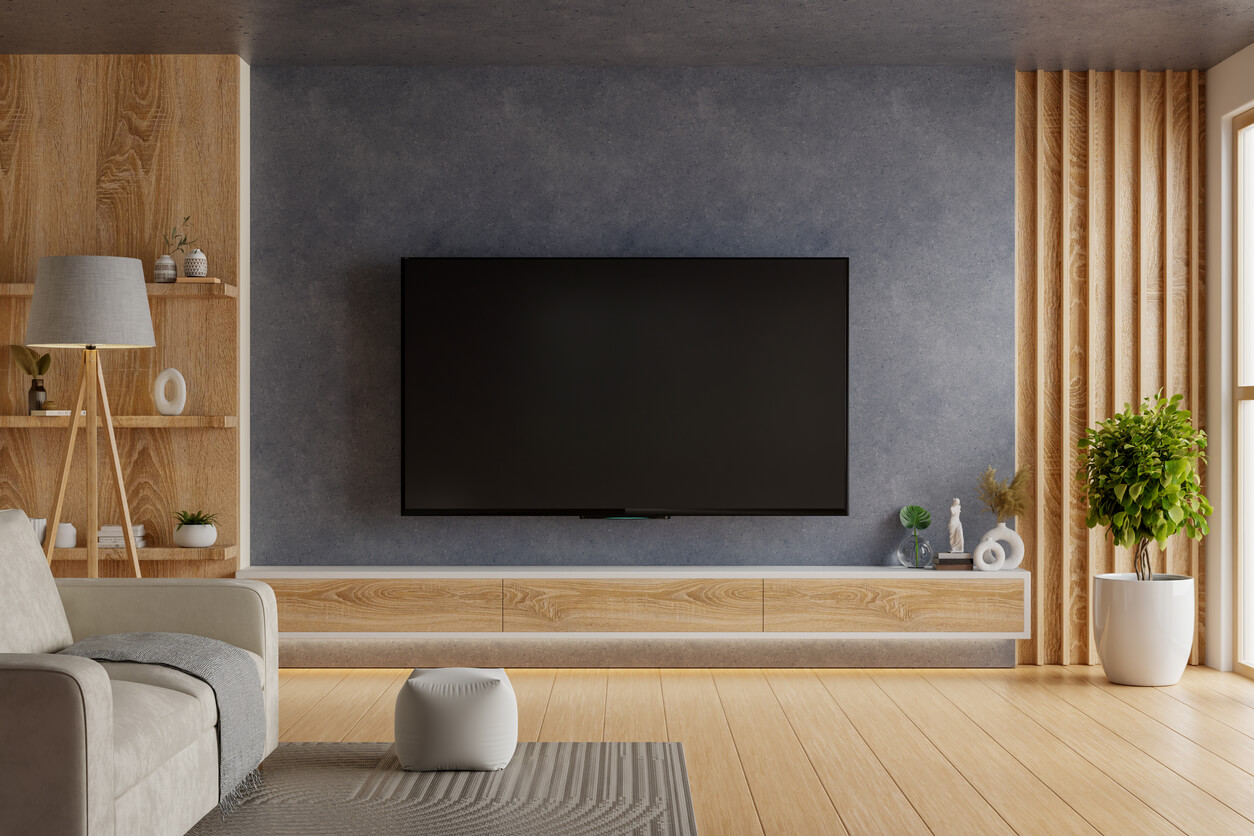
Whether sitting on a stand or, more commonly these days, mounted on a wall, a TV will inevitably have a power cable and another for the aerial. Add in connections to set-top boxes, recording devices and other gadgets, and you can easily end up with a messy collection of cables.
For a tidy appearance, you will no doubt want to do something about these cables. This will generally mean hiding the cables away, and there are several means of doing this. However, you may need to disconnect and reconnect devices in future, so you will need access to these cables.
In-Wall vs. Surface Mount Cable Management Solutions
In-wall cable management is the tidiest and most permanent, but also the most difficult to accomplish successfully. Surface mounts are easier, but you need to choose one that suits your requirements.
Solutions include:
- Wire raceways that fix to the wall and conceal cables inside them. Some have the appearance of moulding or trim, and all can be painted to blend in with the walls.
- Wire ties, cable wraps and wire clamps can be used to bundle cables together and fasten them to beams or similar fixtures that will hide their presence. If your wall-mounted TV has plug sockets behind it, the cables can be held in place and never seen.
- Conduit piping is generally associated with industrial use and is fixed to the wall with a cable inside it. When used domestically, it can be painted to blend in.
- Cord kits and concealers can be in different colours or made from fabric and provide decorative concealment.
- Concealing wires by pushing between skirting boards and carpets is often effective, provided you do not have too many cables to deal with.
- Furniture can also be useful, hiding wires behind sofas or bookcases.
- Simply painting the cables the same colour as the walls may mean they effectively blend into their surroundings.
Concealing cables in walls is more difficult, and the process will depend on the type of wall:
- Stud walls comprise plasterboard fastened to battens, and you can run a cable behind the plasterboard. Simply cut a hole in the plasterboard behind the TV and another lower down where you want the cable to emerge. Fix a weight to the cable and feed it through the top hole and down so you can pull it out at the bottom. For neatness, fit a socket box over each hole.
- Brick walls require a channel to be cut in the plaster and brick using a hammer and chisel. Insert the cable, covered by conduit or trunking for protection, into the channel and then replaster and paint to finish.
Safety Codes and Electrical Considerations for Wall-Cavity Routing
The main standard for electrical wiring is AS/NZS 3000, Electrical Installations (commonly referred to as the Wiring Rules). This applies throughout the country and outlines requirements for the safe design and development of electrical installations.
The National Construction Code (which includes the Building Code of Australia) covers the integrity of wall cavities with particular regard to moisture management and fire safety. This is particularly relevant to cabling since, if placed in cavity walls, it can bridge the cavity and cause damp issues.
Cables in walls should be run in prescribed zones that are within fifteen centimetres of a wall junction box or the ceiling or floor. If not, they must be protected by a steel conduit or similar to avoid damage by screws or nails. Failing this, RCD protection must be provided if the cable is less than five centimetres deep. Cables run through thermally insulated cavity walls may overheat, so lower current-carrying capacity should be reduced, or larger cables should be used.
Low-voltage wires, such as those for speakers, are generally safe to run in most places and circumstances. However, regular electrical cables are a greater threat to safety and so need to be protected. Additionally, placing low-voltage cables parallel to power cables can cause signal interference and should be avoided.
Tools and Techniques for a Flawless, Hidden Cable Finish
Much of the work involved in concealing cables can be achieved quite easily with no special skills or tools needed. Indeed, if the TV and aerial socket are adjacent to the TV mount, the cables can be easily bundled behind the screen so they aren’t visible and a true ‘floating TV’ effect is achieved.
Mounting the TV will require a power drill and screwdriver to ensure the bracket is secure and a spirit level to make sure it is horizontal. Fixing conduits and cable trunking may additionally require adhesive and a means of cutting them to the right length.
The greatest demand is when hiding the cables in walls, when you will need a hammer and chisel to cut out plaster and bricks, then plaster and a trowel to restore the wall. If you do this, it might be prudent to obtain a wall scanner to detect the presence of cables so you do not inadvertently cut through them at a later date.
When to Hire an Expert for Complex Wiring (HDMI, Power, Soundbar)
Although connecting your devices and concealing the cables may be simple tasks in most cases, there are times when you may need the help of an expert. These include:
- Complex system integration, such as installing multiple devices, sound optimisation and integrating with smart home systems.
- Running cables through walls and ceilings requires efficient cable management and protection.
- Installing new outlets and increasing your electrical demand.
- Technical problems that persist and cannot be easily identified or resolved.
Anything that is beyond basic connections and troubleshooting will generally require the help of a professional electrician. Trying to do it yourself can be dangerous and may invalidate your home insurance. If you need help with your TV installation, contact us, and we will ensure it is done properly and safely. For professional TV wall mounting that includes expert cable concealment and compliance with all safety codes, All About Hanging can achieve that perfect ‘floating TV’ look while ensuring your installation is safe, clean, and professionally finished.